Showing posts with label Celeb Scandals. Show all posts

October 18, 2021

Rachel Nichols Should Have Known: At ESPN/Disney You Don't Cross the Boss

Today marks the debut of ESPN’s new daily (M-F) show, NBA Today (real creative titling, I know.)


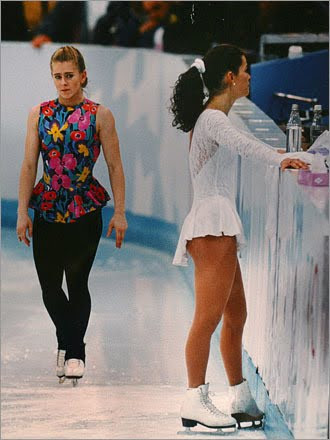
This “new” show is hosted by Malika Andrews (above right) but for all intents and purposes NBA Today is pretty much just a reworking of ESPN’s long running but recently canceled, The Jump.

The Jump featured Rachel Nichols (above left), Kendrick Perkins, Richard Jefferson and others and was noteworthy for having fresh NBA news and reporting, as well as for its entertaining bickering sessions between the inarticulate but lovable country bumpkin Perkins, and the sarcastic and condescending Jefferson. Nichols was the host and referee and would begin each show with a thoughtful monologue on whatever NBA-related topic happened to be at the forefront that day.

But The Jump was abruptly canceled back in August after audio recordings of Nichols commenting on ESPN colleague Maria Taylor surfaced.
 

In a conversation with LeBron James associate Adam Mendelsohn (and by the way, why can LeBron always be found — either by happenstance or because he purposely inserted himself — at the epicenter of anything controversial happening in the NBA?) Nichols openly complained about being passed over (in favor of Taylor) to host the NBA Finals pregame and halftime shows. Nichols also strongly implied that Taylor was the choice largely because she was black.

Now Nichols is well-respected in NBA circles. She’s well-connected, bright and she built a reputation on being a spunky, solid interviewer. But Taylor was a continuously rising star at ESPN for years — charismatic, intelligent and, let’s face it, younger and more attractive than Nichols. A former two sport athlete at Georgia who (unlike Nichols) can bring a player’s perspective to her commentary, Taylor climbed the ranks at ESPN quickly, beginning with her early days as a college football sideline reporter. So when Nichols' comments came to light she was quickly branded on social media as jealous and petty. Moreover, her allegations of reverse racism no doubt didn’t sit well with many of ESPN’s African-American personalities, who aligned themselves with Taylor and were likely insulted by the insinuation that Taylor was getting opportunities not based on merit but due to skin color.

But this wasn’t even the worst part of the leaked recordings -- at least in terms of the damage it did to Nichols’ career. It was the pot shot she took at her ESPN bosses when expressing her dissatisfaction with their decision:

“... I wish Maria Taylor all the success in the world — she covers football, she covers basketball… If you need to give her more things to do because you are feeling pressure about your crappy longtime record on diversity — which, by the way, I know personally from the female side of it — like, go for it. Just find it somewhere else. You are not going to find it from me or taking my thing away.”

Okay, wait a minute… Your thing?… Sweet Rachel my dear, I hate to break it to you, but you don’t have a “thing.”

But I’ll get back to that...

Despite all of this taking place at the worst possible time for everyone involved -- just days before the NBA finals were set to begin -- ESPN didn't immediately discipline Nichols for her words. On the first episode of The Jump after the recordings effectively blew up the Twitterverse, Nichols began the show with a convoluted apology that referenced learning in journalism school the importance of “not being the story.” That was followed by reassurances that she respected Taylor and her work, and a declaration of gratitude for being a part of the ESPN team. Meanwhile, Perkins and Jefferson (who if you didn’t know, are both of black) spent their time looking mostly uncomfortable with the entire situation and trying to figure out what to say in support of Taylor without piling on and embarrassing Nichols. Perkins for his part came up with this fence-riding gem when addressing Nichols directly:

“I know your heart -- great person, great individual. My only hope is that we have a commitment overall to support each other through this process and continue to support each other through our journey.” 

Process?... Journey?... Thanks Perk for the corporate-speak and vague, meaningless, platitudes.

But back to our story...

A few days later, it was Andrews who took over the sideline reporting role during the 2021 Finals (the gig that Nichols never wanted in the first place.) Andrews crushed it and in the process garnered herself some prime time exposure, ultimately parlaying the opportunity into the host role on NBA Today.

Taylor, who had been in contract negotiations around this time, wound up leaving ESPN. She’s at NBC now where she’s hosted very late night Olympics coverage and is now part of the Sunday Night Football studio crew with Tony Dungy and Drew Brees.

Nichols fate was sealed almost from the minute the recordings were first leaked. She failed to learn from the mistakes of so many ESPN colleagues that came before her. If she had, she would have known that at ESPN the rules are keep your mouth shut and don't be controversial. ESPN is a Disney property  after all (one of the conservative company's many holdings) and it pays to be able to say (as ESPN fantasy football analyst Matthew Berry often jokes) “I'm a company man.”

But the thing is, it’s not a joke. History shows that at ESPN you either tow the company line or you're out.

Nichols should ask Bill Simmons what happens to you at ESPN when you butt heads with the bosses. Specifically, ask how it worked out when he was feuding with the network over the content of his B.S. Report podcast, editorial control of ESPN's sports and pop culture blog Grantland, critical comments he made about NFL commissioner Roger Goodell, and other issues. Because Simmons got his start with his home-grown Boston Sports Guy website he was likely used to a certain amount of independence and editorial freedom. So when ESPN disrupted that with concerns over what Simmons was saying on his podcast, as well as what he was tweeting and writing in his columns, it caused enough friction that the network chose not to renew his contract in 2015.

Similarly, Nichols should ask Jason Whitlock how ESPN handles on-air talent who disparage their colleagues. In 2006, Whitlock accused ESPN's Scoop Jackson of “ghetto posturing” and called his work “an insult to black intelligence.” It was not the first, nor would it be the last insensitive, overtly racist, or downright asinine comment that Whitlock would make. Indeed, he continues to spew trash opinions, even as recently as last week. But more to the point, ESPN correctly read that Whitlock (as a writer and commentator) was a sensationalistic (and calculated) contrarian and a purveyor of radical thought designed to draw attention to himself, and the result of his rant against Jackson was Whitlock's dismissal from ESPN.

If Nichols didn’t learn from Whitlock to steer clear of the hot button in this country that is race, she should have learned it from Jemele Hill. Hill co-hosted Numbers Never Lie, His & Hers, and SportsCenter 6 on ESPN -- but not without controversy. 

Jemele Hill

Hill had a history of inflammatory comments and wasn’t shy about speaking her mind. She once equating rooting for the Boston Celtics to claiming Hitler was a victim -- a remark for which ESPN suspended her. On the His & Hers show, she (and partner Michael Smith) would routinely opinionate on social issues and also sometimes go out of their way to inject and debate racial components of ostensibly benign sports stories (such as whether Serena Williams was the greatest women’s tennis player of all time.)

ESPN was no doubt aware of the tack Hill was fond of taking and tried to ignore it. But things began to unravel when she tweeted that Donald Trump was a white supremacist. The White House took exception and demanded an apology and the story made national headlines. Just a short time later -- in the middle of Colin Kaepernick’s movement encouraging NFL players to kneel during the national anthem as a call for social justice -- Hill spoke out against Dallas Cowboys owner Jerry Jones. Jones had threatened to bench any player who “disrespected” the flag, to which Hill responded by urging fans to boycott Cowboys advertisers, should Jones follow through on his threat. For this, ESPN suspended Hill again and a short time later moved her off of the network to The Undefeated, an ESPN web property similar to Grantland. By the end of that year, Hill was gone from ESPN entirely.

It’s understandable that Nichols might have been unhappy with how ESPN was using her and that she believed she should have been given the NBA Finals hosting gig over Taylor based on having superior credentials and longer tenure. But do you know who else was unhappy with the way ESPN was using them?… Michelle Beadle. 

Beadle was a fixture on ESPN for years. She co-hosted SportsNation, NBA Countdown, and in her second stint with the network, Get Up with Mike Greenberg. But Beadle wasn’t shy about hiding her frustration with the show or her opinions on delicate issues (such as the Ray Rice domestic abuse case.) On top of that, she was sometimes condescending towards those with opinions she felt lacked validity. Watching her on Get Up was sometimes uncomfortable; you could actually feel the tension and see how frustrated she was with the show’s format and lack of seriousness. She seemingly wanted the show to be something that it wasn't (similar to the way Hill and Smith aspired to make their shows more pop culture oriented.) Beadle unceremoniously left Get Up and ultimately moved on from the network altogether.

In the end you could say that Nichols fatal mistake was that she got too cocky. “You’re not going to do it by taking away my thing,” was her quote.

Nichols should ask some of the other talent at ESPN how protective they are of their “thing.” They’ll probably (correctly) respond by saying they don’t have a “thing.” Their “thing” is whatever the network and bosses decide their "thing” is. Personalities like Marcus Spears, Cassidy Hubbarth, Elle Duncan, Dan Orlovsky, Mina Kimes, Jorge Sedano, Anita Marks, and Katie Nolan have all learned this. All of them are Swiss Army knives, handling everything from sideline reporting, to in studio hosting work, remote reporting from home, and guesting on Max Kellerman's This Just In as well as the God-awful Around the Horn show. (Heck, the latter is pretty much the only on-camera work that Sarah Spain even does anymore.) It’s because all of these individuals understand that their "thing" varies from week to week depending on how ESPN decides to use them. Laura Rutledge understood this too. She bounced around the network handling varying roles before landing comfortably as the host of NFL Live. And who at ESPN could have a bigger beef about the way she's being used than Molly Querim, who sits in the dummy seat every day on First Take, where all she essentially does is throw out a topic and then sit on her hands quietly for ten minutes while Kellerman and Steven A. Smith do all the talking.

Look, discussing the lack of diversity in sports broadcasting, race, social inequity, domestic abuse, and all the rest is necessary and can be incredibly productive. And certainly all of the columnists, reporters, analysts, et. al. at ESPN are entitled to their opinions. But the history at that network is clear -- you don’t get to have it both ways. You don’t get to enjoy the healthy paycheck and massive reach that ESPN provides -- and then get to say, write or tweet whatever you want. Nichols forgot that above almost all else, Disney wants to remain family-friendly and aims to produce content and promote talent that is non-controversial and advertiser friendly. Those who want to radically opinionate, stir the pot, or call out the company publicly are invariably shown the door. It’s why Lucasfilm (another Disney property) dismissed Gina Carano from The Mandalorian after tweets claiming voter fraud in the 2020 Presidential election, mocking the wearing of face masks to prevent Covid 19, and comparing conservatives who are criticized for their beliefs to Jews being persecuted by the Nazis. It’s not that Carano (or anyone else) can’t think, or say or do things that go against the grain -- it's simply that the cultures at the companies under the Disney umbrella just won't tolerate it.

November 18, 2009

Defending Isiah

Isiah Thomas and Magic Johnson pregame

Sportswriter Jackie MacMullen has co-authored a new book with Magic Johnson and Larry Bird focused on their relationship and rivalry, which began when the two faced off in the 1979 NCAA Championship game and continued as the pair became (arguably) the greatest NBA players of the 1980's.

Thus far, the most compelling thing about this book (and what everyone’s talking about) are Magic’s comments about his “friend” and fellow NBA Hall of Famer Isiah Thomas. Before I get into that, however, I’ll provide the backstory (word of warning, there’s a lot of it), do my best to identify all the different players (no pun intended) in this drama, and determine what could have possibly led to Magic’s very curious claims and allegations against Thomas.


Isiah Thomas with his wife and Magic Johnson

Magic and Isiah traveled many of the same roads. Just two years apart in age, the two grew up in the midwest -- Magic’s roots are in Lansing, Michigan, Isiah’s in Chicago. Both are point guards that led their college teams to NCAA titles as sophomores, and each turned pro immediately after. The future superstars signed with the same sneaker company (Converse) and shot TV commercials together. But even as the two struck up a friendship and rose to become the best point guards in their conferences, their professional careers, personalities and reputations were quite different. Isiah wound up drafted by the lowly Detroit Pistons and endured several miserable seasons on losing teams. Detroit was then, as it is now, a blue collar town -- harsh, gritty, tough. Beginning with Isiah, Pistons owner Bill Davidson, GM Jack McCloskey, and head coach Chuck Daly slowly set about building a winning franchise by assembling parts (Bill Laimbeer, Rick Mahorn, Joe Dumars, etc.) and developing an extremely physical style of play the rest of the teams in the league would come to hate but wouldn't be able to match.

Magic, meanwhile, joined the Lakers, already a winning franchise with All-Star players Jamaal Wilkes, Norm Nixon, and Kareem Abdul-Jabbar. Johnson flourished in glamorous Los Angeles and enjoyed immediate success as an NBA champion and Finals MVP and quickly became L.A.'s media darling with the brilliant smile.

But on a deeper level, what was taking place with Magic and Isiah would prove to be at the root of all the animosity and bad feelings that have now developed between the two. Magic, because he was in L.A., was schmoozing, ingratiating himself to others, and playing to the media. It was Hollywood after all, and image was everything. Isiah, meanwhile, didn’t care about his image or how he was perceived by others. He was more focused on trying to turn his team into a contender and orchestrating the on-court and front office moves that would make his team as good as it needed to be to become winners. Magic and the Lakers were already winners. They were beating everyone and looking good doing it. Thomas and the Pistons aspired to beat everyone... while beating them up. This is how it all began -- Magic becoming “Showtime” and Isiah a “Bad Boy”.


Isiah Thomas and Magic Johnson tip-off kiss

Throughout the early 80's, Magic and his Lakers versus Bird and the Celtics was the premiere rivalry in the NBA. But by 1987, the Pistons were also a legitimate power, losing the conference championship to the Celtics in seven games. The following year, Detroit made it to the championship against the Lakers and a good part of the story revolved around the two good friends and All-Stars (Magic and Isiah) finally facing each other for the crown. In a move that seemed strange to most, the pair actually kissed (European style) before every game. The Lakers wound up winning the series in seven and it looked like a new rivalry was born.

By this time, Magic and Isiah were like brothers. Johnson often let Thomas stay at his home and drive his cars whenever the Pistons came to town. Once, after the NBA Finals, the two took a suite at the Helmsley Palace and spent the weekend in New York.

But things started to unravel after Magic’s announcement in November 1991 that he was HIV positive. Magic’s startling revelation and subsequent departure from the game stunned the sports world and the speculation soon began as to how Magic got HIV, as well as who might have given it him. (One popular rumor identified porn star Heather Hunter as the source.) In any case, Magic was barely gone two months, when he was given special permission to play in the 1992 All-Star Game. Isiah, then president of the NBA Players’ Association, played a major part in getting this done when he petitioned Commissioner David Stern’s office for Magic’s inclusion even though sponsors were skittish and many players had concerns about playing with Magic. (Karl Malone, for instance, then one of the league’s biggest stars, expressed his inner paranoia publicly when he questioned the idea of Magic’s full-time return to NBA and worried what would happen if Magic suffered an on-court cut and started bleeding.) Thomas’ recollections of defending Magic during this time are crystal clear:

"They weren't going to let Magic play in the All-Star Game; all the players were coming out [against him]. You know how that all got turned around? I had a meeting with all of the players -- and I told them not only was he going to play, but we were going to shake his hand and give him a hug. And I was the first to shake his hand and hug him and give him a kiss, to let people know that's not how the virus is spread. Call Charlie Grantham [the former union executive director and COO] and ask him how Magic got to play in the All-Star Game. Ask him who called the meeting."


Magic Johnson hook shot over Isiah Thomas in the All Star game

That game wound up being a celebration of Magic. Johnson and Thomas repeated their famous kiss ritual and Isiah led the rest of the eastern All-Stars in laying off Magic (to an almost embarrassing degree) and letting him score at will so he could claim MVP honors in what we thought at the time would be his farewell to the league.

It was immediately after these events that another rumor about Magic’s HIV began circulating, albeit in a much less public fashion than the speculation about Heather Hunter. This rumor claimed that Magic had gotten HIV because he was gay or bisexual. Few then (or now) believed it, particularly not Magic’s teammates or his other close friends.

Which brings us to Magic’s assertions in MacMullan’s book. He claims that it was Thomas who spread this rumor, that he (Magic) was tremendously hurt by this, that it led to the complete dissolution of his and Thomas’ friendship, and that this failed relationship has been, “the biggest personal disappointment of his life.”

Isiah, for his part, says, "Magic acted and responded off some really bad information that he got… I think Magic has been misled on a lot of things, and unfortunately this has been another one of them. I am hurt and disappointed that he has chosen to believe others as opposed to his closest friends.”

Thomas doesn't stop there. In his own defense, he's called Magic out and questioned his character and forthrightness by claiming, “There is this public person and then there is this b.s. person. There's Earvin and then there's Magic.”

Magic’s thoughts about Isiah seem less than credible for several reasons. For starters, why has Magic waited until now, eighteen years after the original events took place, to make all this known? Has he secretly hated Thomas all these years? Isiah says that whenever he’s seen Magic over the years, “he has always been friendly.”

Second, as Thomas himself has pointed out, he was Magic’s closest friend and the two men had engaged in very unusual public displays of affection. This being the case, Thomas is 100% right when he says, “if I was questioning [Magic’s] sexuality, then I was questioning mine too. That's how idiotic this is.”

Then there's the idea of motive. Why would Thomas want to spread such a damaging rumor about his closest friend? It seems unlikely given Thomas’ history. In his dealings with Stern and his fellow players, he had just stood up for Magic in this regard. Also, Isiah’s brother Gregory had AIDS, so it's likely Thomas must have had some understanding and sensitivity towards those with HIV. Wouldn’t a more likely source of the defamatory rumor about Magic be someone like Malone, who was very vocal about his concerns over Magic coming back and having to play against him? Or someone like the Miami Heat's Tim Hardaway, the poster boy for homophobia who was quoted as saying, “I hate gay people and I don't like to be around gay people” and “I wouldn't want [a gay teammate] on my team.”


Miami Heat's Tim Hardaway

Hardaway made those comments in 2007 but was an NBA All-Star (and was being considered for the Dream Team) at the time the Magic rumor started. Make no mistake, back then, there was still a great deal of ignorance regarding HIV and AIDS -- enough that the Magic rumor could have been started by literally anyone, and not necessarily out of malice, but through a lack of knowledge about how HIV is contracted. Truthfully, how could Magic, or anyone else for that matter, definitively know the origins of this rumor? Magic says that his agent at the time, Lon Rosen, is the one who told him it was Isiah. This “he said, she said” looks to be the extent of Magic’s proof and it seems (either immediately or after contemplating things all these years) he's convinced himself that Rosen is telling the truth.

And why not? Isiah’s an easy target -- someone the public is willing to believe the worst about. But Isiah also happens to be someone people (including Magic’s inner circle of old NBA buddies and associates) might want to lay this rumor-starting thing off on. Could Magic’s allegation be part of a larger conspiracy against Isiah that’s been going on for years?... It’s not as far-fetched as it sounds. Isiah’s track record during his playing career certainly made him more than his share of enemies. Among other things:
  • After the Pistons were eliminated in the ’87 conference finals, Isiah (in what was perceived by white America as nothing short of blasphemy) disparaged Larry Bird when he said that “if he weren’t white, he’d be just another good guy.”

  • When Detroit was on the verge of a championship, Thomas ran Adrian Dantley out of town by getting management to trade him for Dallas’ Mark Aguirre, Thomas’ old friend from back in Chicago.

  • At the end of the Game 4 of the ‘91 Eastern Conference Finals, just as the Chicago Bulls were about to complete a sweep, Thomas led his teammates off the floor and right past the Bulls bench with time still left on the clock.

  • And perhaps most famously, Thomas allegedly masterminded a “freeze-out” of Jordan during the 1985 All-Star Game.
Certainly these aren’t the only reasons why Thomas seems to be so intensely disliked now. He did, after all, run the CBA, the NBA’s beloved farm system, into the ground. He also dreadfully mismanaged the New York Knicks, one of the league’s crown jewel franchises, setting the team back for years to come. But does any of this mean Isiah is a false friend who did Magic dirty? (If being a bad front office exec means you're a bad person, than Elgin Baylor is Lex Luthor, Hannibal Lechter and Vlad the Impaler all rolled into one.)

Many of Isiah's other actions are at least somewhat defensible. Consider:

His comments about Bird were in support of ones made by Dennis Rodman. Lost in the crush of anti-Isiah sentiment that exists today, is the fact that it was Rodman who originally made derogatory remarks about Bird, claiming that he was overrated and that he had only won multiple MVPs because he was white. Isiah chimed in in defense of his younger teammate. Also, remember that these comments were made only minutes after the Pistons were eliminated from the playoffs and that Isiah knew he had given away the series in game five when his lazy pass was stolen by Bird. Under those circumstances, you’d think Thomas’ comments about Larry Legend could be brushed off as sour grapes…They weren’t. Race is always a hot button for reporters, and the media (fresh off the feeding frenzy that ensued after Al Campanis' controvesial statements) blasted Thomas.

For sure, Thomas had the ear of both GM McCloskey and owner Davidson, and often pulled strings to get his way. And yes, Thomas engineered the Dantley for Aguirre trade. But how is this any different than Kobe Bryant running Shaq out of L.A.? ... Or his attempt to force an Andrew Bynum for Jason Kidd deal a few years later? Individual star players in the NBA (moreso than in any other professional sport) can have a great deal of influence on management decisions. The smart ones sometimes use this influence to make power moves or even hold their teams hostage. Look at what the Cavs have done over the last two years in efforts to appease LeBron. But no one holds this against King James. He just "wants to win." One can argue that if the Dantley/Aguirre deal doesn’t get done, the Pistons never get over the hump and claim their two titles. And at least Isiah was never responsible for getting his championship-winning head coach fired the way Magic did Paul Westhead. (It’s interesting how history seems to have forgotten this dirty little detail about the beloved Magic’s career.)

The Pistons walkout at the end of game four in ’91 was completely classless and maybe the worst display of bad sportsmanship ever (not counting that New Mexico soccer chick.) But you know what? The Pistons did it as a team, and it was completely in character. It was the end of a long and very fierce rivalry that took place back in the days when NBA rivals (particularly in the Eastern Conference) were often bitter enemies. There was animosity between the Sixers and Celtics (Bird and Dr. J threw punches during a playoff game) and Detroit HATED Boston because they had what the Pistons wanted -- conference titles and championships. The Celtics hated the Pistons right back (Robert Parrish clubbed Laimbeer in the face, for crying out loud.) Later in the decade, on their way to conference titles, Detroit eliminated the Bulls from the playoffs three straight seasons. The Bulls hated them for it and because the Pistons physical style made them a frustrating team to play. And while I’m not forgiving the ’91 walkout, for two teams that despised each other, hugs and warm handshakes at the end would have been disingenuous. At least give Isiah credit for not being two-faced.


MIchael Jordan talks with Isiah Thomas on the bench in the All Star game

And as for the infamous '85 All-Star Game freeze-out, the story goes this way:  some of the Eastern Conference All-Stars resented Michael Jordan’s rapid ascension into super-stardom and were jealous of his fat Nike contract and all his other endorsement deals. Jordan, it seems, was rising too high too fast and the East All-Stars, led by starting point guard Isiah, conspired to keep the ball out of Jordan’s hands and limit his scoring opportunities. Isiah, it’s said, had extra motivation to do this because the game was played in Indianapolis. This was Isiah’s territory, conspiracy theorists would have you believe, because Isiah played at Indiana. It was bad enough that Jordan was now the toast of Thomas’ home town of Chicago. He’d be damned if he was going to let Jordan grab any glory in Hoosier land. By game’s end, MJ was limited to 2 for 9 shooting and had only seven points.

But the reality is there was no freeze out. Jordan simply had an off night shooting and his playing time was limited by East coach K.C. Jones who gave Jordan’s backup, Sidney Moncrief, the same number of minutes as Michael (22).

Also consider that Isiah played less than half that game. This means that in order to effectively freeze out Jordan, he would have had to have the cooperation of backup point guard Dennis Johnson and others on the Eastern squad. It’s doubtful that Thomas, then just 24 years old could have persuaded DJ and veteran teammates like Erving, Moses Malone, and Robert Parish to participate in his alleged plot.


Michael Jordan and Isiah Thomas

And yet the idea of a villainous Thomas screwing Jordan over has endured, even though Jordan himself (most recently, at his Hall of Fame Induction) has dispelled the idea. (Let’s see, a claim of alleged backstabbing by Isiah that turned out to be false… Interesting.) But even as the freeze-out has now been revealed to be little more than NBA folklore, at the time, Jordan and everyone else was more than willing to believe it was real. Indeed, in Jordan’s eyes, it was real enough for him to use as a reason to keep Isiah off the Dream Team. When the IOC ruled that U.S. pro athletes would be able to compete at the Barcelona Olympics, and USA Basketball set about building a team, Jordan kept everyone at bay with a host of non-committal remarks that he was "very interested" in playing. Jordan was at the absolute peak of his power during this time -- NBA champion, reigning MVP and the unquestioned face of the league. USA Basketball, the NBA, and Nike, among others, desperately wanted Michael to play, but Jordan couldn’t stand Isiah. Beyond the events of the ‘85 All Star Game, Jordan still resented Thomas for all that had taken place during their playoff battles, for the Pistons’ on-court thuggery, for the “Jordan Rules” that had frustrated him for years, and for other reasons that only Jordan himself could justify. (To be sure, if there’s one thing we’ve learned from Michael’s very bitter induction speech, it’s that the man can hold a grudge, and that he takes both real and imagined slights against him personally.)


The Dream Team on the cover of Sports Illustrated

So as it turns out, there was a plot involving Isiah and Jordan -- except Thomas was the one that got screwed. As a condition for Michael joining the Dream Team, Isiah would be left off. Magic, meanwhile, has his own take on this incident. “Isiah killed his own chances when it came to the Olympics,” he says. “Nobody on that team wanted to play with him... Michael didn't want to play with him. Scottie [Pippen] wanted no part of him. Bird wasn't pushing for him. Karl Malone didn't want him…”

Really Magic?... NOBODY?

Well we already know why Jordan and Magic were against him. Pippen was a Bull and Jordan’s wingman, so it’s no surprise that he’d also object to teaming with Isiah. And after years of Bad Boys-Celtics run-ins and the remarks from back in ’87, you can see where Bird would be opposed. But what could guys like Chris Mullin, David Robinson and Clyde Drexler (guys Isiah hardly knew and rarely played against) possibly have against him? Not that it really mattered. Jordan’s word was law and as soon as he made his feelings known, Isiah’s participation was no longer a consideration.

But it’s curious that in the MacMullan book, Magic would, on the one hand, accuse Thomas of stabbing him in the back by way of false innuendo, but then stop short of naming that as the reason he helped keep Thomas off the Dream Team. It’s as if one had nothing to do with the other. And maybe it didn’t. Maybe Thomas’ exclusion had more to do with the types of actions and behaviors Davidson was alluding to when he said:

"I was very, very close to Isiah, and there were times he was almost like a son. But, because of his background... I told him he had to change... I said, 'You've got it made now. Don't keep doing those things that you've been doing.'… But he couldn't change...We just come from different backgrounds. He had to fight his way up, and I didn't have the problems he had growing up. There's a lot of good things about Isiah, but when we had our parting, it was over something pretty substantial."

Those unnamed things were substantial enough for Davidson to renege on an offer he purportedly made to Isiah to join the Pistons front office after his playing career ended -- a position that later went to Thomas' backcourt mate Joe Dumars.


Isiah Thomas on the cover of the May 1988 issue of Sport magazine

Perhaps those things are what Magic meant when he said, “Isiah killed his own chances…” and why he never stuck up for Thomas, the way Thomas stuck up for him with Stern prior to the ‘92 All-Star Game. Still, one wonders why Magic, like Davidson, doesn’t go into detail or offer any insight as to why Thomas was, is, or should be so reviled.

Even some of Thomas' former teammates, John Salley for instance, have mixed feelings about him. It’s puzzling given all the man’s positives. Over the years he has been heavily involved in charitable and humanitarian causes, including personal outreaches to curb gang activity, organizing “No Crime in Detroit Day” and donating both his time and money to numerous causes. Indeed, Thomas was once awarded the J. Walter Kennedy Citizenship Award as the most charitable player in the NBA.

Thomas did a lot for his fellow NBAers as well. During his time heading the players’ union, he successfully negotiated to reduce the agents' cut of contracts from 10% to 4% -- a move that most assuredly drew the ire of many an agent... including one Lon Rosen.

Speaking of Rosen, Thomas had this to say about him:

“I think you can go back and look in that era and see who [Magic’s] closest friends were, and who his closest friends are now. At that time, I don't consider Lon Rosen to be one of his closest friends; he was one of his business advisers making money off him."


Magic Johnson and Isiah Thomas

Maybe there are two sides to Isiah. But it seems this may be true of Magic as well. One thing about Magic’s issues with Isiah, however, seems fairly certain -- like everyone else, he isn’t really sure who started the rumor about him, particularly after so much time has passed. And in their rush to sell books via rash, reckless, headline-grabbing accusations, neither MacMullan nor Magic ever connect any dots or present any type of compelling evidence against Thomas. It's all thoughtless conjecture.

And once again, why are we just hearing about this now? This all started close to 20 years ago. If Magic has known it was Isiah all these years, why did he continue to be friendly towards the guy? Thomas says, “Whenever [Magic] came to a Knick game, he was standing in the tunnel with me. He and [Knicks assistant coach] Herb [Williams] and I, we would go out to dinner in New York.”

This all seems easy enough to confirm. Someone just needs to check with Williams. And if Isiah’s story is true, then the questions should shift back to Magic. Why would you be friendly and go out to dinner with someone that’s backstabbed you? Someone, according to MacMullan, “with whom your relationship was over many, many years ago.”


Cover of the book When the Game was Ours

When you hold Magic’s version of events up to the light of day and consider what his reasons might be for calling out Isiah almost two decades after the fact, you come back to one incontrovertible fact -- Magic is hawking a book. He’s selling his story and every good story needs good guys and bad guys. When the Game Was Ours is supposed to be about Magic and Bird. But that’s old hat… Michigan State-Indiana State, Lakers-Celtics, series clinching sky hooks, we’ve heard it all before. What the story needed was a villain...

I guess Magic and MacMullan either found one or invented one.


March 6, 2009

The Dichotomy of Nancy and Tonya: A Timely Look Back


It was 1994 -- 15 years ago almost exactly -- that Nancy Kerrigan and Tonya Harding faced off at the Winter Olympics in Lillehammer, Norway. Kerrigan, after being attacked and clubbed in the leg by an associate of Harding's at the US Figure Skating Championships in Detroit, could not compete. Harding took first place at the event and secured a spot on the Olympic team and, after she denied involvement in the Kerrigan attack, the USOC (with no proof to the contrary) had no choice but to allow Harding to compete in Lillehammer. Kerrigan, meanwhile, in an unprecedented move by the USOC, was given a spot on the Olympic team in place of Michelle Kwan, who had finished second at nationals. A media frenzy ensued as reporters and cameras followed Harding and Kerrigan's every move leading up to the Olympics.

The next month, Kerrigan and Harding had their showdown at the '94 Games (which incidentally, were the first to be staggered -- i.e., held in a different year -- from the summer games.) The ladies figure skating final that year was packed with contenders and star power, including China's Chen Lu, Canadian national champion Josée Chouinard, reigning World silver medalist Surya Bonaly, and two-time Olympic champion Katarina Witt. Shown in prime time, the broadcast was one of the most watched in US history. An estimated 45 million people (representing about 48% of all households in this country that owned TVs) tuned to watch this intro (culled from the Pop Culture Fiend Archives) and the ensuing drama.


When it came time for Harding to skate, she missed her first jump, then, to most everyone's amazement, interrupted her routine, skated over to the judges sobbing and explained that her shoelace had broken. Harding was allowed to fix her shoe and skate again later, but in the end, Ukraine's Oksana Baiul won the gold medal. Kerrigan (with her Katherine Hepburn looks) had to this point been a media darling and object of sympathy, but -- after seemingly pouting on the medal stand after winning silver -- came off as a sore loser.

It's interesting to see the dichotomy of these two over the last decade -- how fulfilled and content Kerrigan seems today, while Harding appears still bitter and resentful about everything that's transpired. Admittedly, she's had a much harder life than Kerrigan, both before these events took place and after. After all, she grew up poor and struggling to find the funds for training, dropped out of high school, was (allegedly) physically abused by her mother, banned for life by the US Figure Skating Association, cited for multiple DUIs, claims she suffered domestic violence at the hands of various boyfriends, failed at both boxing and singing, and to this day, she's still reviled by the public for her role in the plot against her rival. Even during last fall's Democratic Presidential primary, the two campaigns wound up referencing Harding in a negative way.


And of course, Tonya was also the star of one of the very first celebrity sex tapes. Way before Paris Hilton and Kim Kardashian were on anyone's radar, Harding's ex-, Jeff Gillooly sold a home video of he and Tonya having sex on their "wedding night", though later it was revealed that they were just role-playing.

Kerrigan, by comparison, has pretty much led a quiet life since Lillehammer. Upon her return to the US, she was skewered by the media after being caught on-mic complaining during a Disney World Parade honoring her. Afterwards, she retreated from the spotlight and retired from figure skating, only to quickly pop up as the star of a few professional skating shows. She hosted Saturday Night Live, got married, had a cameo in the Will Ferrell comedy Blades of Glory, but has spent a good deal of her time just doing charity work and raising her three kids.

February 17, 2009

Is Chris Brown's Career Over?

No one seems to be broaching this subject, but it's entirely possible.

Dude beat up Rihanna. And by all indications, it was particularly horrific. We’ve all heard all the gruesome details. Among other things, he threatened to kill her, split her lip, and choked her unconscious.

So where will Brown go from here?

It seems the public is fairly apt to forgive all types of celebrity misbehavior these days. Why in just past year or so, we’ve been momentarily appalled by (and then quickly re-embraced) stars caught in scandals involving sex tapes (Kim Kardashian), gambling (Charles Barkley), expletive-filled tirades aimed at their children (Alec Baldwin), racism (Don Imus), husband stealing (Denise Richards), perjury (Lil’ Lim), assault and battery (Naomi Campbell), drunk driving (Heather Locklear), anger issues (Christian Bale), plus plain old fashioned drug abuse and marital cheating (too many to list.)

But this thing with Brown seems a little different. Those who batter and abuse women are judged very harshly by the public. As the D.A.'s office builds its case against Brown, each day it seems more and more details are leaked, the alleged severity of Rihanna's beating gets worse, and this entire episode gets uglier and uglier. Some evidence even suggests that this wasn’t an isolated incident and that Brown had a history of abusing his girlfriend.


But beating up Rihanna in particular, the darling of the R&B/hip-hop world, could prove to be career-suicide for Brown. With Rihanna’s popularity, her beauty and her image being what they are, if this was 1960, this would be like someone beating up Doris Day.

The two incidents this draws comparison to are when Sinead O’Connor tore up the picture of the pope on Saturday Night Live, and Mel Gibson’s sexist, anti-semitic rage after he was stopped for drunk driving. 


O’Connor was massacred by the press and the Catholic community especially, and her career was never the same. The jury is still out on Gibson, but Brown would do well to take a page from Gibson's book by doing the following:
  1. Issuing a statement accepting responsibility for what he’s done and face up to any punishment levied against him. And not that weak-ass apology he made yesterday where he stated he was, “sorry and saddened over what transpired.” No, Brown needs to get specific, get sincere, and get truly repentant.

  2. Admitting he has a serious problem and enter treatment. Real, professional treatment, not “counseling from his family and his pastor.”

  3. Completely disappearing from public view -- for at least a good year and a half. Dropping out of the public eye (a la Mel Gibson) will go a long way towards stemming the tide of public outrage that’s engulfing Brown right now.
And even if he does all this, Brown will almost certainly have to face the judgment of the music community, which might not be as forgiving as the general public. Consider this: 
Rihanna, who is just turning 21, is like a little sister to many in the R&B/hip-hop realm. Chris Brown and her were poised to take their places as the crown prince and princess of that particular kingdom. After what’s happened, many of hip-hop’s “elders” (including Kanye' West, Timbaland, and others Rihanna’s worked with) may feel protective of her and collectively, they could effectively black-ball Brown and squash any hopes he might have for a comeback. 

Kanye' (who toured with Rihanna) has already referred to her as his “baby sis” and stated that he would do anything and everything for her. And Jay Z, who was largely responsible for Rihanna’s breakout record, "Umbrella", is rumored to be furious with Brown. 

Jay Z has been one of hip-hop’s biggest names for a decade and no doubt wields considerable influence in the industry. Could Jay Z (together with Kanye' and others) use their power to get Brown “blacklisted” in the hip-hop world? 

Brown needs to hope that no further revelations come out about this, and that he can somehow avoid jail time -- two things that would make an already nearly unfixable situation even worse. Brown has already lost endorsement deals, had performance offers rescinded, and lost a ton of fans. And because Brown’s smoother, sexier singing style appeals more to women, he’s bound to lose a good deal of this, a large portion of his following.


Anyone else remember another musical couple, Ike and Tina Turner, and the similar scenario they went through years ago? Ike used to beat on Tina routinely. How’d that turn out? 


Tina went on to multi-platinum albums, multi-Grammy wins, and multi-millions. Ike died in 2007, his contribution to music (which was not insignificant) largely forgotten and having never shed his reputation as a wife-beater. 

Though he’s just 19, with a lot of time to reshape public opinion, if Chris Brown doesn’t play his cards right, he may be facing a similar fate.